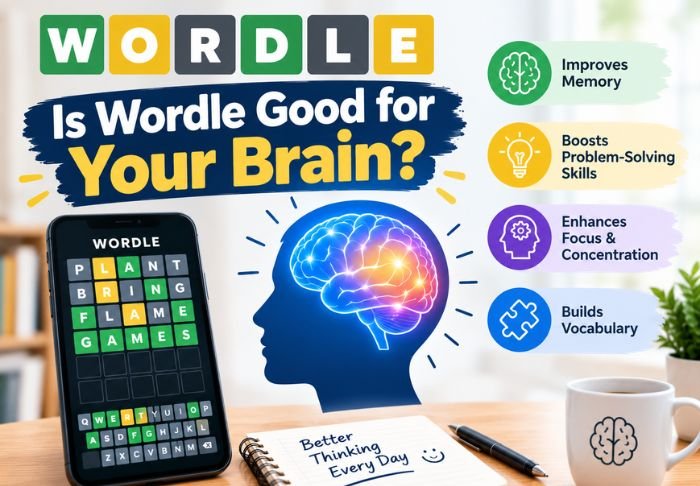

People keep asking: is Wordle good for your brain, or is that just marketing-speak for “mildly entertaining word game”? The honest answer is more modest than the label suggests. It does engage real cognitive skills, but whether Wordle is actually good for your brain in any measurable, lasting way is a different question entirely.
- Wordle engages vocabulary recall and logical deduction
- It can be entertaining and mentally stimulating, but do not expect clinical results
- The real benefit might come from the daily habit rather than the brain challenge
It is good for a quick mental stretch, but a “miracle brain game” it is not. Wordle.news covers the game in an honest light.
What Cognitive Skills Does Wordle Actually Engage?
Before answering is Wordle good for your brain, it helps to know what it actually exercises. The game employs a very specific set of skills rather than a multitude of skills in a wide variety of ways.
The skills it engages are: Wordle Good for Your Brain
- Vocabulary recall – Use of rote learning to recall five-letter words
- Logical deduction – Narrowing possibilities by using color feedback
- Working memory – Tracking confirmed, excluded, and unknown letters
So while Wordle does utilize cognitions skills, they are very specific skills rather than a more general “brain boost.”
Is There Actual Scientific Research on Whether Wordle Good for Your Brain?
This is where things get a little murky. More comprehensive research about so-called “brain training” games in general has yielded inconsistent results, and that really affects whether Wordle good for your brain, or whether it simply feels that way.
There are a few key points about this research:
- Word puzzles can help improve skills related to solving word puzzles
- transfer to other cognitive skills like reasoning, memory, and concentration is not as consistently supported
- There are no studies on Wordle specifically that are led by a clinician
Therefore, it’s definitely helping with a specific type of thinking related to Wordle, but it is a stretch to say that this Wordle good for your brain in the broad sense of the term, in a way that is supported by the existing research.
Does Doing This Daily Make A Bigger Difference than Doing This Occasionally?
In the context of Wordle, I think daily consistency is more important than the actual difficulty of the puzzle being solved. Small mental tasks done on a daily basis have benefits that are not specific to this game, and this game itself is probably quite irrelevant to these benefits.
There are a few reasons daily habits might be beneficial:
- It has been shown that regular mental stimulation can be positive for cognitive aging
- Adding a consistent routine to your day can help improve your sense of overall structure
- Engaging in small challenges can support your ability to focus for a longer period of time
Again, while these benefits might be specific to a game like Wordle, they are probably more generally applicable to any mental game, including things like math and science, which further complicates the is Wordle good for your brain question.
Is There Anything Bad About Using Wordle as a Type of Brain Training?
There’s very little risk with Wordle itself, but with relying too heavily on it as a brain training methodology instead of using consistently proven practices such as exercise, sleep, and mentally stimulating activities.
Keep this in mind: Wordle Good for Your Brain
- One daily Wordle doesn’t replace other healthy, daily habits for cognitive function.
- Wordle alone probably isn’t going to provide the “brain improvement” many expect and, in the long run, probably will lead to disappointment.
- Being constantly mentally stimulated probably is more beneficial than doing the same activity repetitively.
Anyone that expects Wordle is medically beneficial for the brain and is looking to dramatically improve cognition probably is going to be very disappointed.
Is Wordle Good for the Brain in General?
Yes, in most cases, but with mild expectations. It can offer great daily, simple, and enjoyable mental stimulation. Just know, not to expect too much, as there really aren’t strong, additional benefits to the game that help cognitive function overall.
You should consider: Wordle Good for Your Brain
- Treat it as enjoyable mental engagement, not medical-grade training
- Pair it with other varied activities if cognitive health is a real priority
- Value the habit and enjoyment on their own terms, separate from any brain-boosting claims
Enjoy it for what it is, mental stimulation. In reality, it’s cognitively very mild, but enjoyable. Using it with mild expectations can improve cognition slightly, but playing for long, expected brain gains can be disappointing. Played for fun and structure, it’s actually really good for the brain in a mild way.
Conclusion: Wordle Good for Your Brain
So, is Wordle good for your brain? It definitely works your memory and vocabulary and logical thinking, but it isn’t actually “brain training” in the clinical sense. Still, it is an entertaining, quick game to play every day. To see more explainers like these, wordle news has lots of content for you to enjoy!
FAQs: Wordle Good for Your Brain
Q: Can Wordle help me with my vocabulary?
Yes, repeatedly thinking of five letter words can build your vocabulary, but the effect may be small.
Q: Is Wordle endorsed by neurologists?
Not specifically, but many neurologists recommend mental stimulation to stave off cognitive decline.
Q: Does rapidly completing Wordle mean you’re more intelligent?
Not at all. People who rapidly complete Wordle are simply more familiar with the patterns of the game.
Q: Is a crossword puzzle more beneficial for your brain than Wordle?
Not necessarily. Research has been inconclusive to the benefits of word games in general.
Q: Can playing Wordle too often become a negative habit?
Not particularly. Rarely, a player may become stressed with trying to keep their streak.
Q: Is Wordle good for your brain compared to crossword puzzles?
Both engage similar skills like vocabulary and pattern recognition, but neither has strong clinical evidence proving one is definitively better.
Q: Is Wordle more beneficial for seniors?
Mildly, yes. Wordle won’t prevent cognitive decline. To stave off cognitive decline, many clinically recommended activities should be done as well.
Q: Does playing Wordle improve memory in daily life?
Not noticeably. The type of memory you use when playing Wordle is called working memory and it doesn’t transfer to other memory tasks you perform in daily life.
Q: Is there a “wrong way” to play that reduces any brain benefit?
If you’re using solvers or clues constantly, you probably aren’t getting any brain benefit because you aren’t performing any deductions.
Q: Do doctors recommend Wordle as part of cognitive therapy?
It’s unlikely Wordle is ever recommended by doctors, however they probably recommend activities that promote general mental engagement.
Q: Is Wordle better for the brain than social media?
Probably. wordle challenges your brain more because it uses reasoning, and if you’re playing it correctly, no clues or solvers, it strengthens your memory.
Q: Can children play Wordle to benefit cognitively?
Yes. Playing Wordle can strengthen a child’s memory and build their reasoning skills.
Also Read: What is the aim of Wordle?