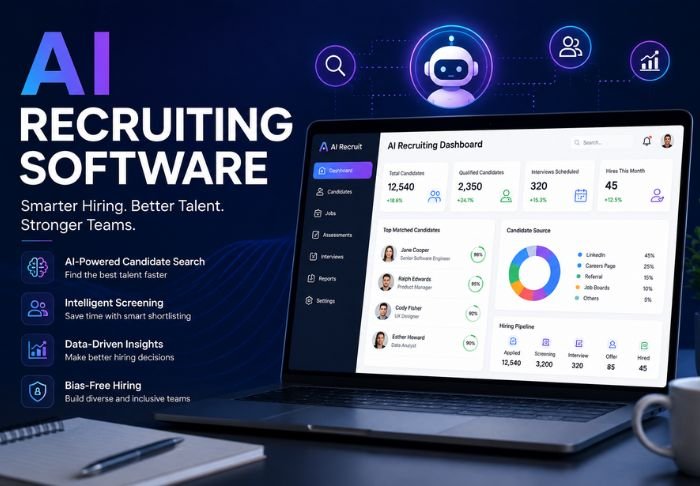

AI recruiting software uses machine learning and automation to help companies source, screen, and evaluate job candidates faster than traditional hiring methods. It reduces manual work across the hiring funnel.
- Automates resume screening and candidate shortlisting
- Uses algorithms to match candidates with job requirements
- Reduces time-to-hire and administrative workload
Many HR teams utilize these tools to efficiently manage higher application volumes. Just as wordle news helps readers navigate the daily wordle puzzles, this article helps readers with the basics of AI-powered hiring tools.
What Is AI Recruiting Software?
AI recruiting software uses machine learning and automation to perform recruiting tasks. Recruiters can use these tools to filter and/or rank applicants based on specific criteria.
These tools integrate with existing recruiting software and help automate recruiting workflows, which contains applicants’ resumes and communications with the candidates. Some of these tools are sold separately and others are integrated into larger HR/talent management software suites.
In general, these tools are aimed at lessening the manual work recruiting teams have to do, and improving how candidates are assessed against job requirements.
How Does AI Recruiting Software Work?
Most AI recruiting software tools use NLP to analyze a resume and job postings, and then score/rank the candidate based on the analysis. The models used in the tools are trained on how to assess skills and experiences based on keyword matches.
This is typically what the process involves:
- Parsing resumes into structured data (skills, education, work history, etc.)
- Analysing parsed data against job requirements
- Score or rank candidates predicted job fit
- Flag/shortlist top candidates for recruiter review
Additionally, some tools include chatbots for preliminary candidate screening, and integrate with calendar apps for automating interview scheduling and analysis. The level of automation varies widely. Some tools aim to fully automate the recruiting process, while others aim to simply augment human recruiting efforts.
What Features Should You Look For?
Not all tools offer the same features, so it is imperative that you align the features offered with your hiring needs. Core features to consider include:
- Parsing accuracy
- Bias mitigation
- Integration with your ATS
- Customizable scoring/ranking
- Reporting & analytics
Other features, such as reporting and analytics, give HR a way to track how effectively their hiring funnel is working. If the hiring platform provides an explanation as to why a candidate was given a particular score (i.e. how a score is calculated), this often makes the hiring platform easier to use, explain to candidates, and audit.
What Are the Benefits of Using AI in Recruiting?
The primary benefit of using an AI recruiting platform is time savings. Automating resume screening allows recruiters to save time they would normally spend screening candidate applications (particularly for high volume applications roles).
Additional Benefits Include:
- Accelerated candidate shortlisting during peak hiring periods
- More uniform evaluation criteria among candidates
- Less interview schedule friction due to automated coordination
Some of these tools can help identify hidden, qualified candidates in large talent pools, as algorithmic screening doesn’t cause fatigue like reviewing hundreds of resumes does to hiring managers.
What Are The Risks Or Limitations?
AI recruiting software has risks and limitations. As previously mentioned, these tools can unintentionally introduce discrimination by replicating past hiring decisions.
Other limitations include:
- Narrow focus on keywords in resumes, resulting in a failure to identify qualified candidates
- Inability to gauge candidates’ interpersonal skills or cultural fit
- Compliance issues in regions that have banned AI-supported hiring
As new legal and regulatory requirements are enacted to introduce transparency around employment-related automated decisions, the hiring industry is trending toward human oversight of final employment decisions.
What Is The Company Looking For?
Determining which recruiting pain points AI software can address helps companies decide which solutions to evaluate. The software’s cost, integration, and compatibility with the company’s ATS and/or HR systems help companies determine which vendor to select.
Key evaluation criteria includes:
- Confirming the software can perform the task for which it is being evaluated
- Ensuring the vendor’s compliance with regulations in the hiring industry
- Checking if the vendor performs third-party bias testing and auditing
Larger, more established enterprises are focused on the tools’ support for compliance and/or scalability, while smaller, newer firms are more concerned with affordability and ease of use.
Conclusion
AI recruiting software can be a powerful tool for many organizations. The software can be a great asset for organizing candidate flow, but can best be thought of as a supplemental tool. Knowing the limits of the software is key for hiring teams to make ethical decisions. For more in-depth explainers, wordle news covers topics beyond the daily wordle.
FAQs: AI Recruiting Software
Q: Is AI recruiting software expensive?
A: AI recruiting software can range from affordable options for small businesses to expensive options for large businesses, based on the volume of candidates and the size of the business.
Q: Can AI recruiting software make final hiring decisions?
A: No, the software is designed to screen and rank candidates, and the ultimate hiring decision is usually made by human resource employees or the candidate’s direct manager.
Q: Is AI recruiting software legal everywhere?
A: The laws that govern automation in the workplace vary by region. Some require companies to notify candidates of the use of automation in the hiring process. Others require disclosure or auditing by an independent party.
Also Read: Top AI Tools for Interview Preparation



[…] Also Read: What Is AI Recruiting Software and How Does It Work? […]