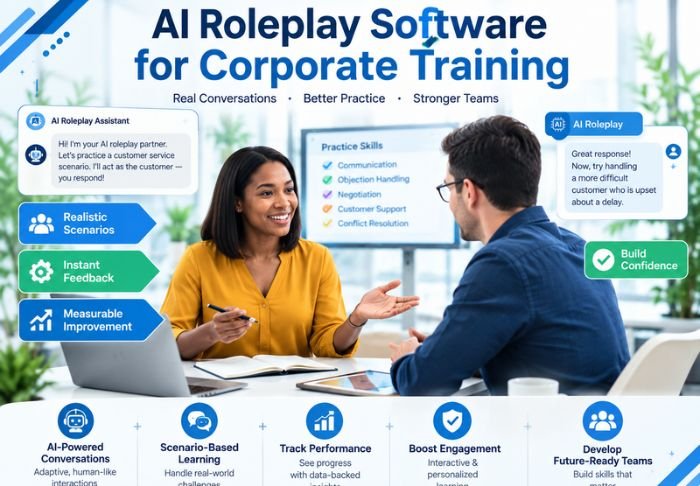

The best AI roleplay software for corporate training allows employees to practice tough conversations with an AI partner instead of a coworker. These tools help generate realistic practice scenarios and deliver constructive feedback.
- AI roleplay software simulates customers, clients, and managers
- Instant feedback is delivered after each practice session
- The best options integrate with an organization’s learning management systems and are configurable for multiple teams.
Not every platform meets every team’s needs, so priorities vary. Beyond wordle news‘ daily puzzle explainers, we cover a variety of practical topics.
What Is AI Roleplay Software for Corporate Training?
The best AI roleplay software for corporate training allows employees to practice conversations they have in the workplace with an AI character that responds like a partner in a conversation.
- These platforms are configurable for various company products and policies.
- Eliminating social pressure, these tools allow employees to rehearse conversations as many times as needed and help generate feedback based on what the user says.
Unlike traditional training with a peer or supervisor, AI roleplay tools provide practice opportunities at any time and without needing to schedule a partner.
Why Are Companies Choosing AI Roleplay Over Traditional Training?
Many corporations are interested in AI roleplay software because they have a large, dissatisfied user group, usually due to the inability to scale traditional roleplay training. Employees feel self-conscious rehearsing with a peer.
Reasons that organizations switch:
- Consistent Practice Quality – The same, high level of practice quality regardless of who is training.
- Less Pressure- Mistakes are made privately
- Faster Onboarding for New Sales and Support Hires
This leads to greater repetition, which is typically what helps build real conversational confidence.
What Features Define the Best AI Role-Play Software for Corporate Training?
Not all software is created equally, and features matter more than names. The strongest software tends to stand out in a few key areas.
What features to evaluate:
- Natural, realistic AI personas that push back and offer resistance
- Customized scoring and feedback regarding tonality and clarity, as well as objections handled.
- Customized scenario builders
- User and team level analytics
Generic scenarios tend to lack the same level of value as customized scenarios.
What Use Cases Benefit Most from AI Roleplay?
Making practice conversations easier and more accessible tends to have the greatest impact in departments where conversations are higher stakes and require practice.
Good Use Cases Include:
- Practicing objection handling and discovery calls in sales
- Rehearsing de-escalation in customer service
- Anticipation practice for feedback and difficult conversations in management
- Rehearsal for having tough conversations in HR
Conversational practice tends to be quicker and easier to implement compared to practice for procedures and processes.
How Do You Choose the Best AI Roleplay Software for Corporate Training?
Define your actual skill gap when selecting the best AI roleplay software for corporate training. Don’t get distracted by the most comprehensive feature list. Your goals will make comparison shopping a lot easier.
A realistic evaluation approach is to:
- Request a demo using one of your actual training scenarios
- Evaluate the integration with your LMS and other tools you use
- Determine how the software will safeguard data and conversations
- Pilot the software with a small team
Results from a pilot tell you a lot more about how a software tool will actually change a behavior than what a sales presentation will tell you.
What are the restraints of the software?
There are limitations to the best AI roleplay software for corporate training. AI roleplay partners will always feel scripted and may sometimes even be repetitive. Feedback will miss what an experienced coach would catch.
What Limitations Should You Keep in Mind?
Even the best AI roleplay software for corporate training has boundaries. AI partners can occasionally feel scripted, and feedback may miss nuance that an experienced coach would catch.
Worth keeping in mind:
- AI roleplay practice is meant to be paired with human coaching
- Feedback is only as good as the scenarios
- Employees may need to be directed to take the practice seriously
Outcomes improve when the practice is paired with a live coach.
Conclusion: AI Roleplay Software for Corporate Training
The best AI roleplay software allows your team to engage with realistic scenarios and provides valuable feedback on practice, and easily integrates with the tools your team uses to learn. Determining your training goals helps you clarify what tools you need, and simplifies your buying decision. For more training-related guides, check out wordle news.
FAQs: AI Roleplay Software for Corporate Training
Q: Is AI roleplay software expensive for small teams?
Many vendors have different pricing structures, with some offering per-seat or tiered licenses, which allows smaller teams to start with a limited number of licenses.
Q: Can AI roleplay software be customized to our company’s products?
Yes, with most software you can upload your product scripts or playbooks to allow for customization to your business case.
Q: Does AI roleplay replace human trainers?
No, it is intended to facilitate practice.
Q: How long do teams typically take to see the benefits of AI roleplay training?
Teams usually see increased confidence in a matter of weeks, with measurable performance gains taking longer and dependent on the frequency of practice.
Q: Is data collected from employees’ conversations kept private?
It depends on the vendor, so reviewing their data retention and security policies prior to adoption is a good idea.
Q: Can AI roleplay work for a remote or globally distributed team?
Yes, since the training is available on demand, and some software has different language options based on the user’s location.
Also Read: Wordle Cheat: How They Work and What to Know